Your finance app thinks you live alone
The story behind Quidough, a personal finance app built for households, after a sync change broke ten years of shared records my wife and I had kept together.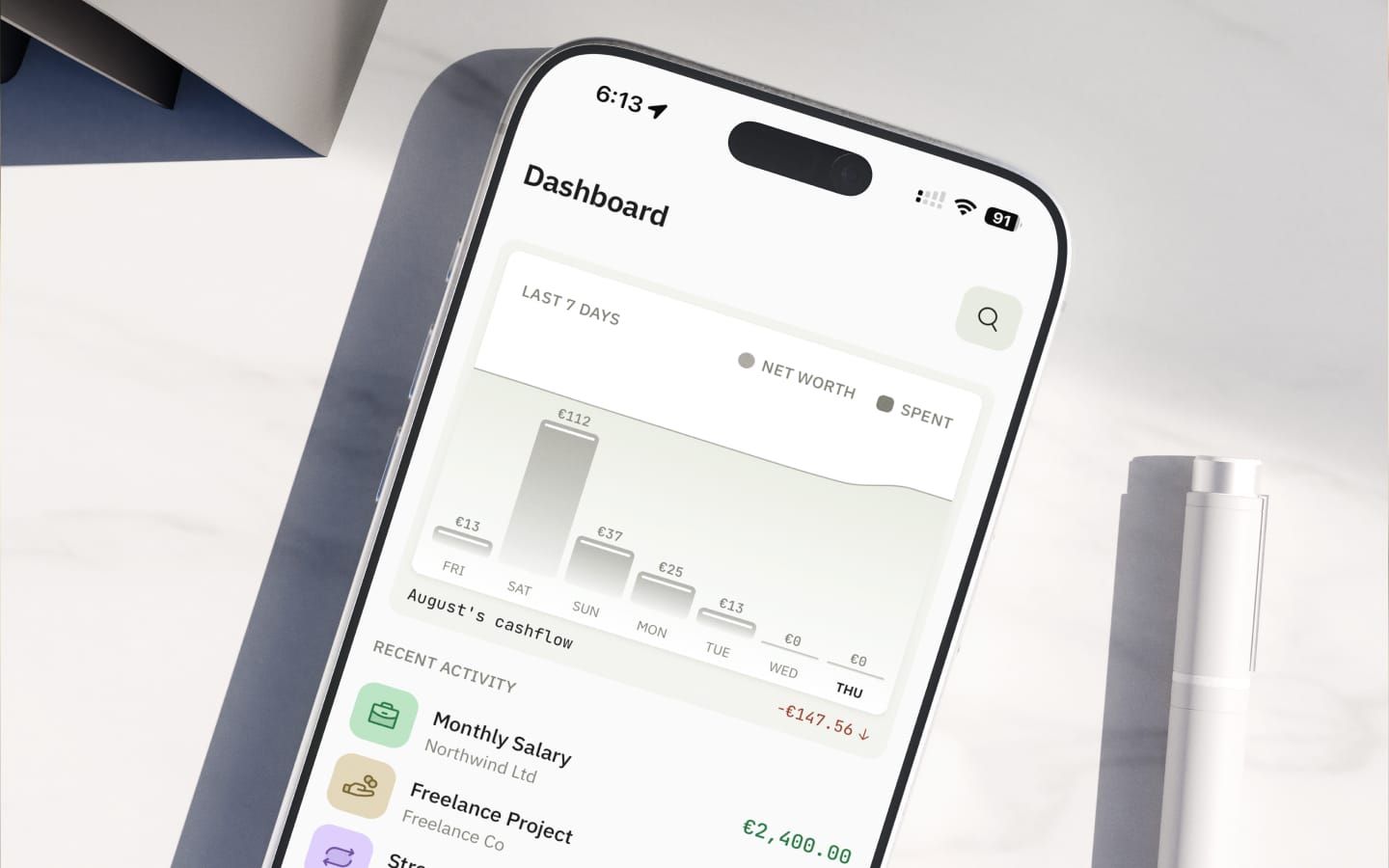
Most households have a version of the same arrangement. One person knows what's in the accounts, what's due this month, and which subscription renewed without asking. The other person asks how we're doing and takes the answer on faith. Nobody plans it that way. It just settles, usually onto whoever minds least.
My wife and I have spent more than a decade avoiding that. Somewhere along the way we started recording every expense into an app built for exactly this: a running record of what comes in, what goes out, and where it went. Not a banking app, not a budget that scolds you in red, just a shared picture of our household's money that either of us can open. It took years to build the habit, and it's the least glamorous thing we do. It also means neither of us is the bookkeeper, and neither of us has to ask.
Then the app changed the way it worked, and the whole thing came apart in one evening.
Up to that point, everything we recorded lived on the servers of the company that made the app. We logged in with a single account, loaded it onto my phone, my Mac, and my wife's phone, and whatever either of us typed showed up on all three. Then the team behind it decided to hand that job over to Apple's iCloud instead. On paper it was an improvement, and I was happy to see it. Apple would take care of the syncing, and the app could stop maintaining something that wasn't really its job.
What I hadn't thought through is that iCloud doesn't store things for an app. It stores things for a person. Every iPhone is signed in as its owner, and anything synced through iCloud lands in that owner's account rather than in some shared space the app controls. I've run into the edges of that model before, though never this expensively.
I made the switch on a Sunday evening, carefully, because ten years of our records were going through it. It took a while, and it worked. The balances were right. Every category sat where I'd left it, and the charts redrew themselves without complaint. I remember being pleased with how smoothly the whole thing had gone.
Then I picked up my wife's phone to do her side, and found there was nothing to do. Her phone is signed in as her. Mine is signed in as me. Our records had gone into my account, and no setting anywhere would let hers reach them. I couldn't put it back the way it was either, because the old way of syncing had been retired along with everything else.
I assumed a replacement would be easy to find, and in a sense it should have been. There are hundreds of personal finance apps out there, and plenty of them are very good. What I worked out over the following weeks is that almost none of them are built for two people who share their money, which turned out to be a harder problem than the one I'd started with. So I built one. This is the story of how Quidough went from a weekend fix to a side project with a waiting list.
A decade of bending tools
It started, as these things do, with a spreadsheet.
I gave it dropdown menus for expense categories so I wouldn't have to type them out. I added charts that were supposed to tell me something useful about where the money went. Then I added a few more things, and a few more after that, until the spreadsheet was spending most of its effort holding itself together and very little of it helping me. It was also, by then, a machine only I knew how to operate. My wife could look at it, but she couldn't really use it, and a shared record that only one of us can touch isn't much of a shared record.
The app we moved to next fixed that, and it fixed it in a way that mattered at the time. I was on an iPhone, and my wife was on an Android, and this app ran on both. It kept track of what we earned and what we spent, sorted everything into categories, and produced a report whenever I wanted one. I paid for the full version once and signed all our devices into the same account. Two people, three devices, one shared picture. For years, that was enough.
The first crack came when the company decided to stop making an Android version and focus on Apple devices only. No website, no plans for one. My wife moved to an iPhone not long after, and I'd like the record to show that was already on the cards and had nothing to do with a finance app. Either way, we carried on as before, still sharing one account, now with everything on Apple.
Looking back, every year of that worked because we were quietly bending the app into a shape it was never designed to hold. One subscription stretched across two people. One login doing the work of two. It held up fine until iCloud came along and took the bend away, and what was underneath was the assumption the app had been making all along: one person, one account, one set of numbers. Sharing between household members was something the team said they wanted to add, with no date attached. In my experience, a feature that arrives with no date is usually one that was never in the plans to begin with.
Hundreds of apps, the same blind spot
So I started looking, and there is no shortage of choice. Beautiful apps for iPhone. Free ones you can install on your own server if you're the sort of person who has a server. Websites, apps, apps that are really websites, some that connect to your bank and some that don't. I spent a few weeks working through them.
I wanted three things. It had to handle more than one currency, because ours doesn't all sit in one. It had to let me bring ten years of records across. And it had to understand that two adults would be using it.
Multiple currencies turned out to be the easy one. Importing my records ruled out almost everything. Every app stores things in its own way, and none of them have much reason to make walking away with your data easy, so most offered no way to bring a decade of records in.
The household requirement was the one that stopped me. A handful of apps offered some form of sharing, but scratch the surface, and it was the same thing every time: an app built for one person, with an invitation screen and a permissions list added on afterward so a second person could be let in. Somebody owns the account. Somebody else gets access to it. That's a landlord and a tenant, not two people who share a life and the bills that come with it.
I'd already lived through what happens when you push two people through a setup meant for one, and I wasn't doing it again. I also wasn't willing to walk away from ten years of records and start over from an empty screen.
A weekend and a working app
I did what anyone with a geeky streak and an unreasonable attachment to their own data would do. I opened Claude Code, pointed it at the file where our old app kept its records, and asked it to work out how that file was organized and then build me something that could read it. Nothing fancy. A screen where my wife and I could both see our transactions and add new ones.
There was no product idea here, no plan beyond that weekend. I wanted our records to have a home we could both open.
By the end of that weekend we had one, and it looked better than it had any right to. I spent a few weekends after that smoothing out the parts that annoyed me and adding the small things we'd missed, but the problem was solved. Nothing lost, both of us back in.
I called it Quidough because I needed to call it something.
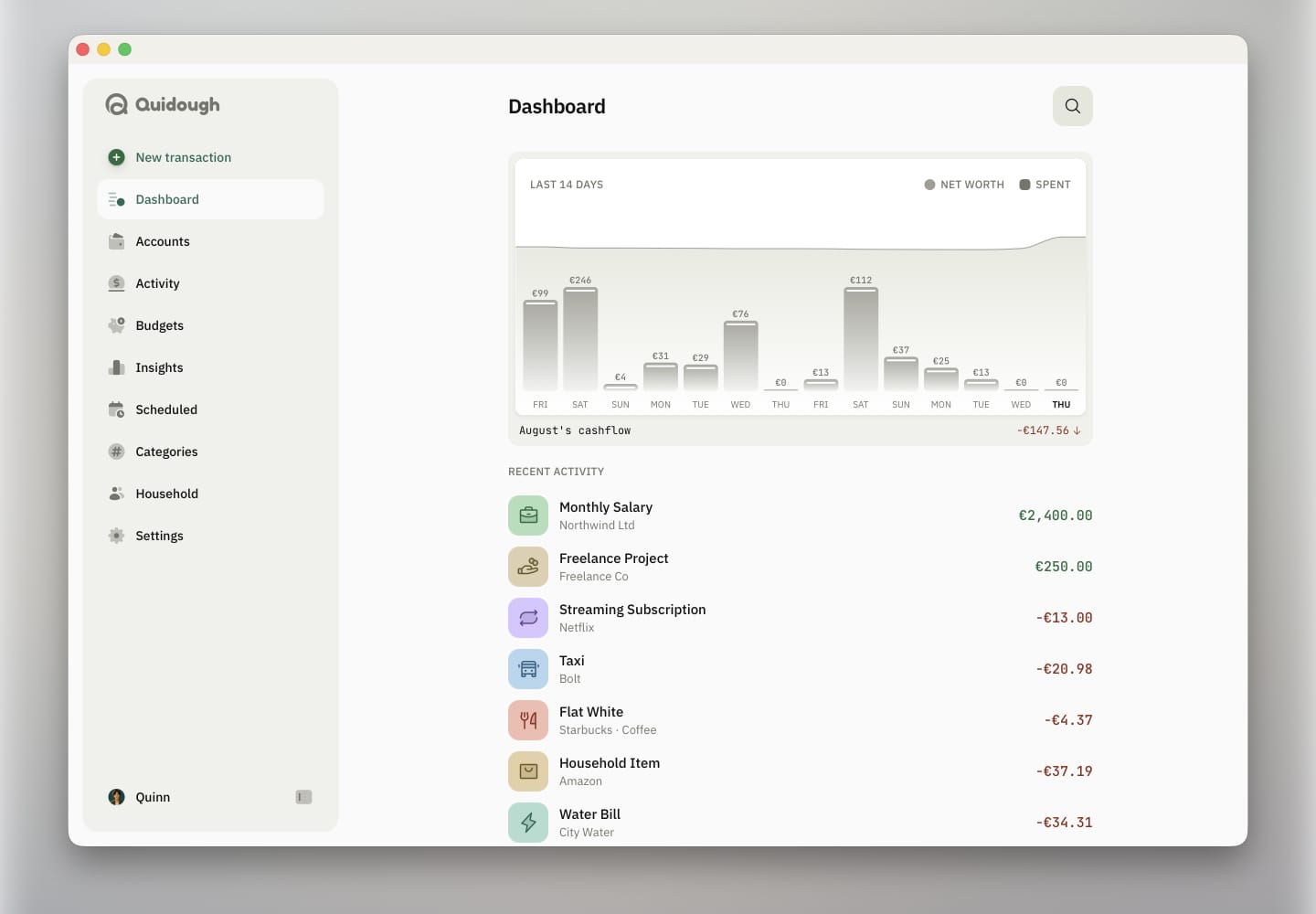
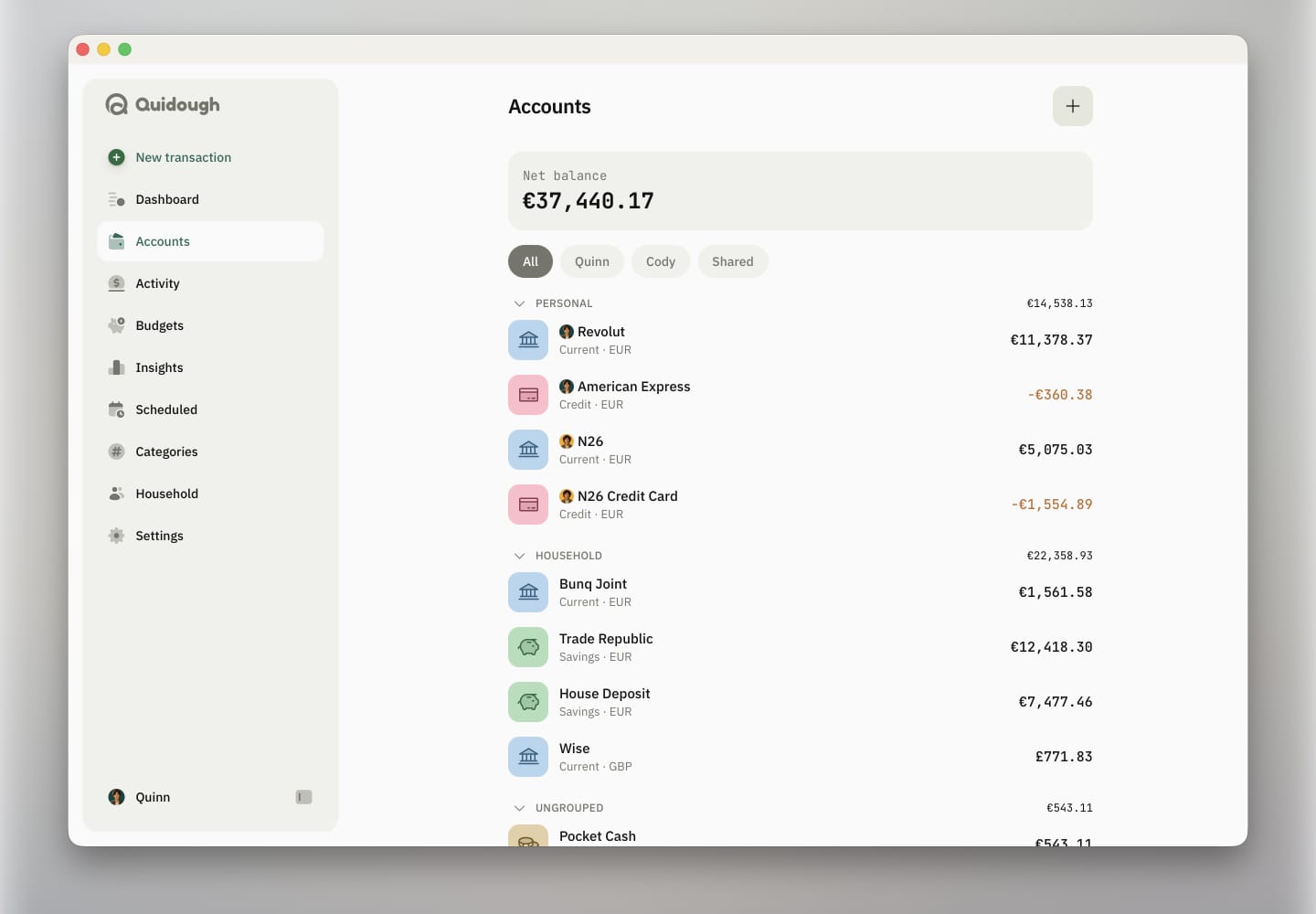
The dashboard and accounts as they look now, rather than as they looked that first weekend.
The friend who asked to use it
A month or so later, I was on a call with a friend, the two of us swapping notes on how we'd been using AI lately. I told him this story, and he asked if he could see it. I hesitated, because what I'd be showing him was our actual money, and then thought, why not. He liked it a lot more than I expected him to.
He'd tried finance apps before, he said, and given up on all of them. The apps were fine. What defeated him was everything you have to do before one of them is any use. You have to invent a set of categories that fit your life before you have any real sense of what your categories should be, and then you have to record things day after day until it becomes a habit rather than a chore. Most people fall at one of those two.
If you've ever downloaded a budgeting app in January and stopped opening it by February, that's probably what happened. I don't think it says anything bad about you. It took my wife and me more than ten years of trial and error to land on something that fits us, and there were plenty of months along the way when we let it slide. If you want somewhere to start that isn't another app, I've written about turning a to-do app into a financial dashboard, which is roughly how we got going.
Then he said he'd use this. Then he asked whether he actually could.
That brought me up short, because the honest answer was no. There was no way to sign up, no separate accounts, and none of the security you'd want around something holding another person's financial life. But the question stayed with me, and over the next few days I caught myself describing the thing to other friends, watching to see how they'd react. Enough of them leaned in that it stopped being a household utility and became a side project, which is the second time that's happened to me.
Why build another one
You might be thinking what I'd be thinking here. There are hundreds of these already, a good number of them made by teams far larger than one person with a laptop. Why add another?
The comparison people reach for is coffee shops. Ten on the same street, all of them fine, all of them with regulars, and nobody thinks the eleventh is doomed. I don't think that quite works. A coffee shop survives on geography, and I can't wander into yours from Rhodes if it happens to be in Lisbon. Software doesn't get that protection. There's one search box and one app store, and attention piles up at the top of the list.
The other half of the comparison does hold, though. What makes a coffee shop yours isn't the machine or where the beans came from. It's whether you feel at home in it. Every finance app tracks transactions, sorts them into categories, and draws you a chart. Where they differ is who they imagine on the other side of the screen, and nearly all of them imagine one person with a full view of their own spending and complete say over it.
That describes plenty of people. It doesn't describe a household, where two adults spend from the same pot, make decisions that land on each other, and both need to see the same numbers without one of them being appointed treasurer.
That's a different idea of who the app is for, and it doesn't get added in an update.
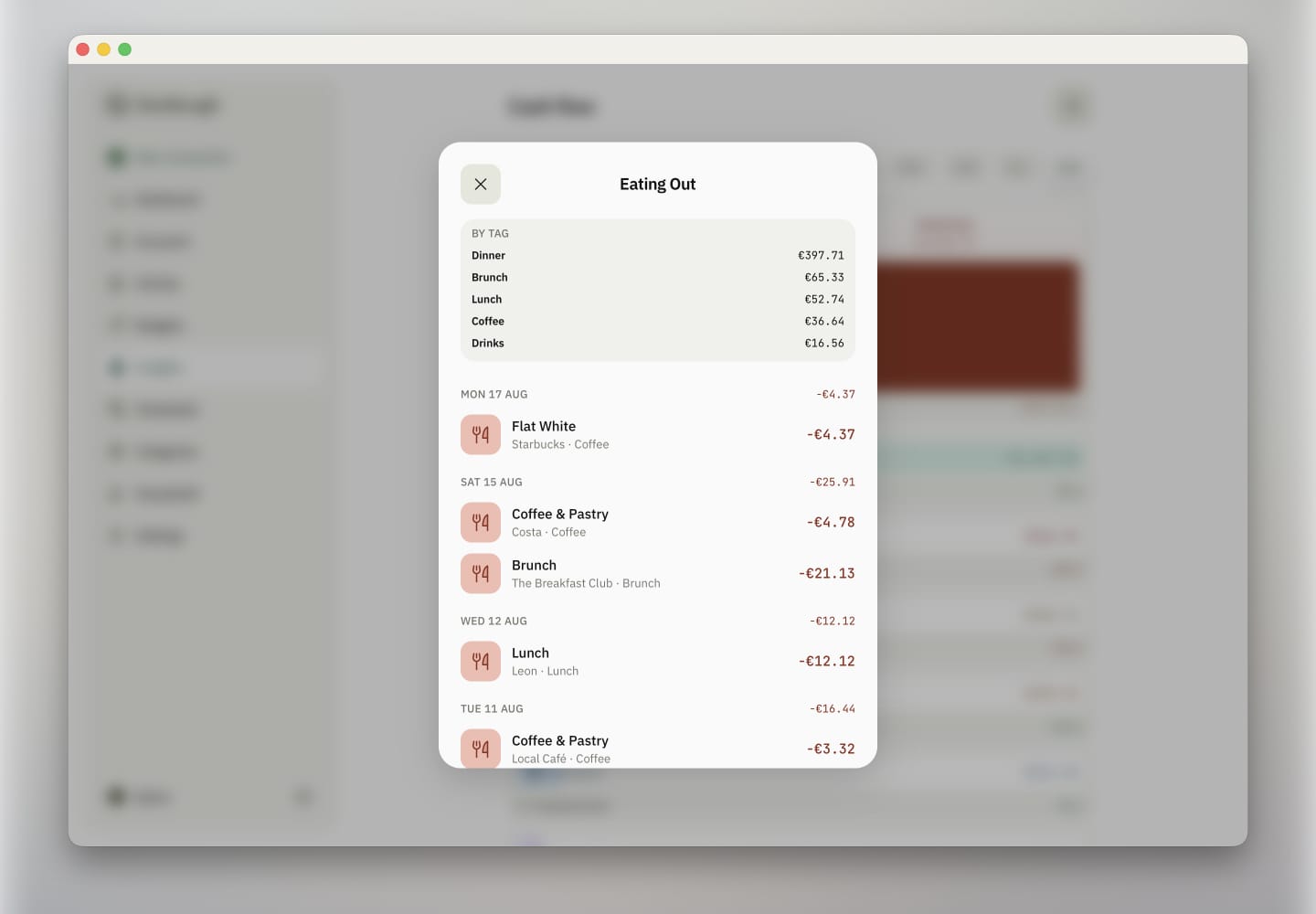
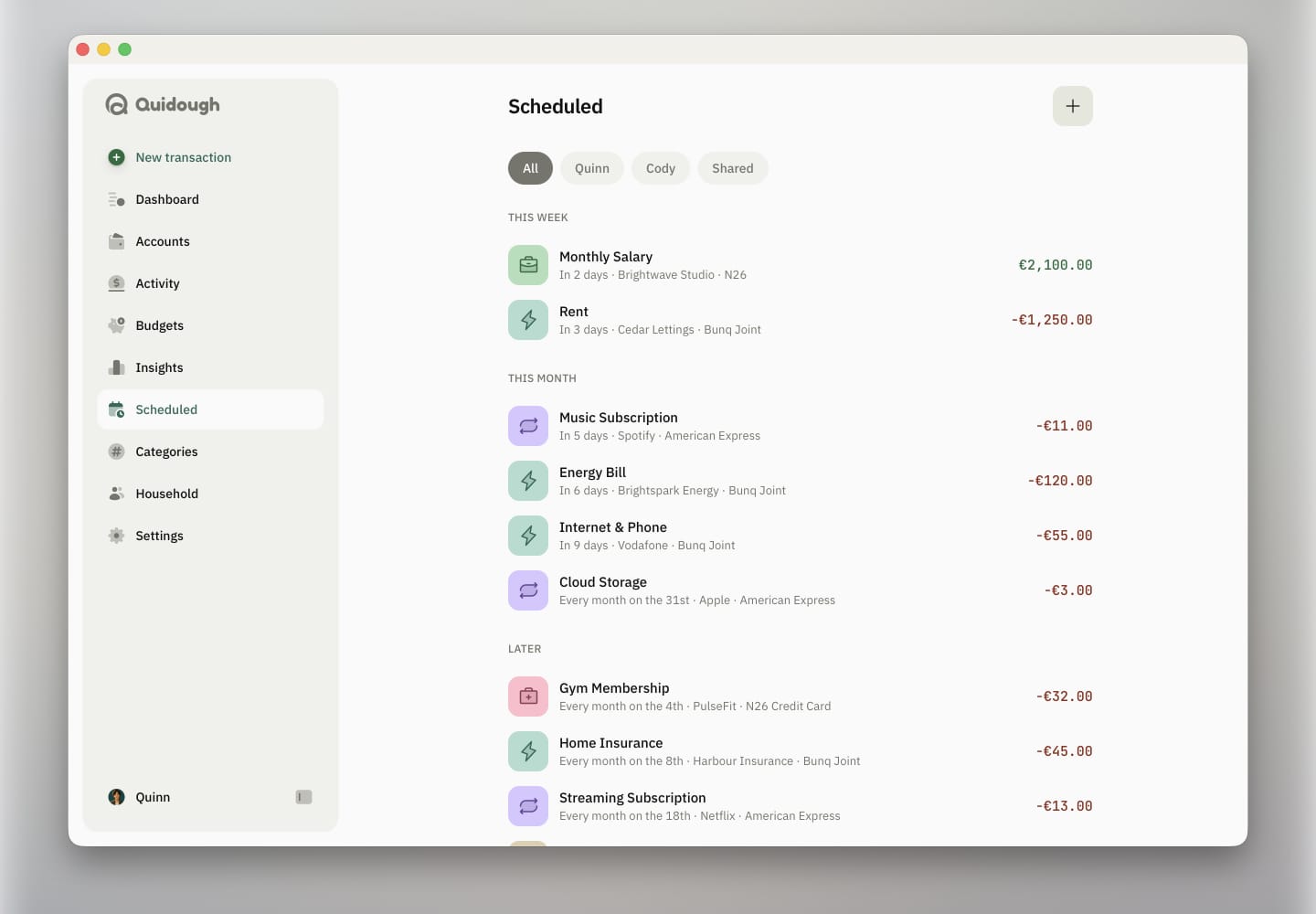
Knowing what's coming turned out to matter more to us than knowing what's gone.
Where Quidough is now
I spent about a month building the parts that let it hold more than two people, and then handed it to the friends who'd asked. They've been using it for over three months now, which means most of the rough edges I've smoothed since then were found by someone who wasn't me.
Most of what I want is in place. There's polish left, and a few things I want to be certain about before anyone trusts it with their own numbers.
It handles several accounts and several currencies, and it works perfectly well if you're the only one using it. But the household part is why it exists at all, and it's built into the foundations rather than bolted on afterward.
If that sounds like your situation, the waiting list is open at Quidough.com. I'll send a note when it's ready.